



Melatonin Receptor
Melatonin receptors belong to the G protein-coupled receptor superfamily, which preferentially couple to Gαi/o proteins. The melatonin receptor subfamily is composed of three members in mammals: MT1 and MT2, which are both binding to the neurohormone melatonin with high affinity, and GPR50, which shows high sequence homology to MT1 and MT2 but does not bind to melatonin or any other known ligand.
MT1 and MT2 are involved in various biological functions including the regulation of biological rhythms, sleep, pain, retinal, neuronal and immune functions. Alteration of melatonin receptor function or expression in humans is associated with depression, Alzheimer’s disease and type 2 diabetes.
Melatonin Receptor Isoform Specific Products
All Product Categories
-
Melatonin Receptor Inhibitors
(2)
View all products
-
Melatonin Receptor Agonists
(35)
View all products
-
Melatonin Receptor Antagonists
(10)
View all products
-
Melatonin Receptor Activators
(10)
View all products
-
Melatonin Receptor Modulator
(1)
View all products
-
Melatonin Receptor Control
(1)
View all products
-
Melatonin Receptor Related Products (67)
Related Products (67)

-
Melatonin Receptor Isoform Comparison
-
TIK-301
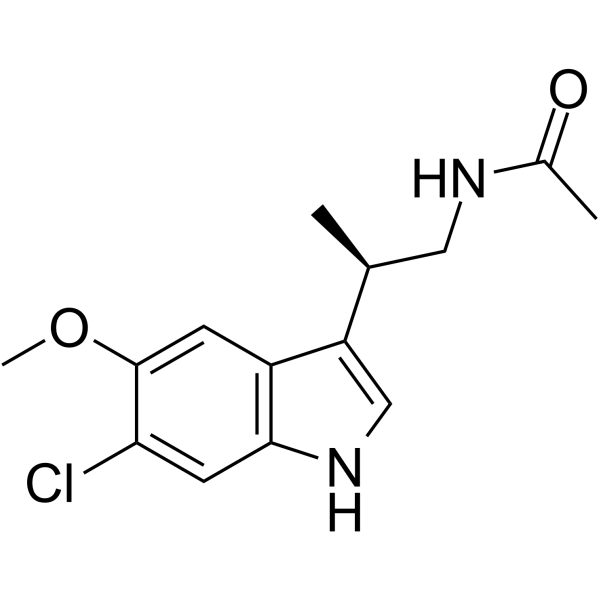 0 ImagesCat. No.: HY-106136CAS No.: 118702-11-7Synonyms: PD-6735; LY-156735TIK-301 (PD-6735) is a chlorinated melatonin derivative and a potent, high-affinity and orally active melatonin MT1 and MT2 receptors agonist with Kis of 0.081 nM and 0.042 nM, respectively. TIK-301 is also a 5-HT2B/5-HT2C receptors antagonist with antidepressant action. TIK-301 has the potential for sleep disorders and other circadian rhythm disorders treatment.
-
DH97-7
 0 ImagesCat. No.: HY-131947CAS No.: 343263-95-6DH97 is a potent melatonin receptor 2 (MT2) antagonist with Ki values of 252 nM and 1100 nM for MT2 and MT1, respectively.
-
6-Chloromelatonin
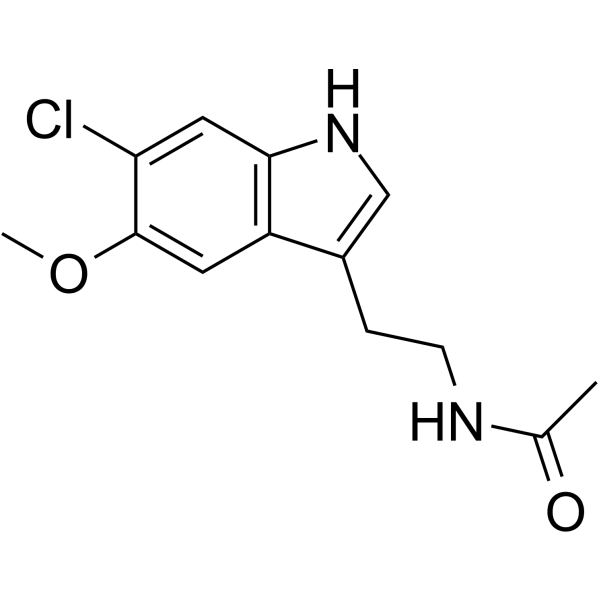 0 ImagesCat. No.: HY-100940CAS No.: 63762-74-36-Chloromelatonin is a potent melatonin receptor agonist with greater metabolic stability than melatonin. 6-Chloromelatonin compete for [3H]-melatonin and 2-[125I]-iodomelatonin binding to MT1 receptors (pKi=8.9 and 9.1, respectively). 6-Chloromelatonin compete for [3H]-melatonin binding to MT2 receptors (pKi=9.77).
-
Methyl-d3 Linolenate
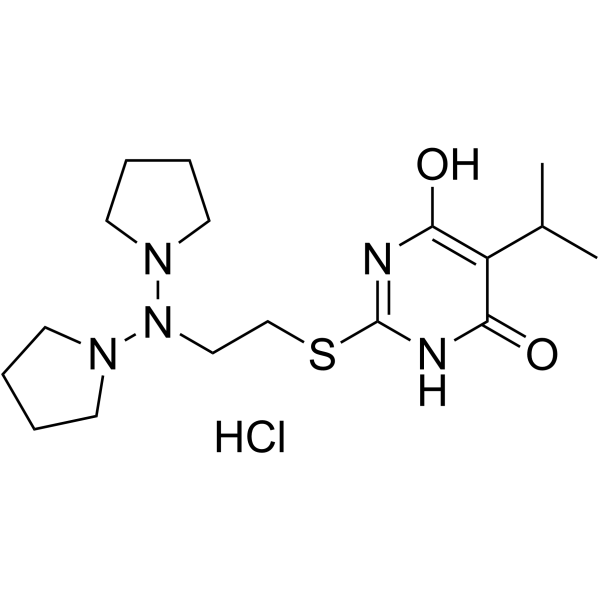
 0 ImagesCat. No.: HY-W744883Methyl-d3 Linolenate is the deuterium labeled Methyl linolenate (HY-21268). Methyl linolenate is a polyunsaturated fattly acid (PUFA). Methyl linolenate has an anti-melanogenesis activity with an IC50 of 60 μM. Methyl linolenate can also be used for studies of the mechanisms and prevention of oxidation/peroxidation of unsaturated fatty acids.
-
GR 196429
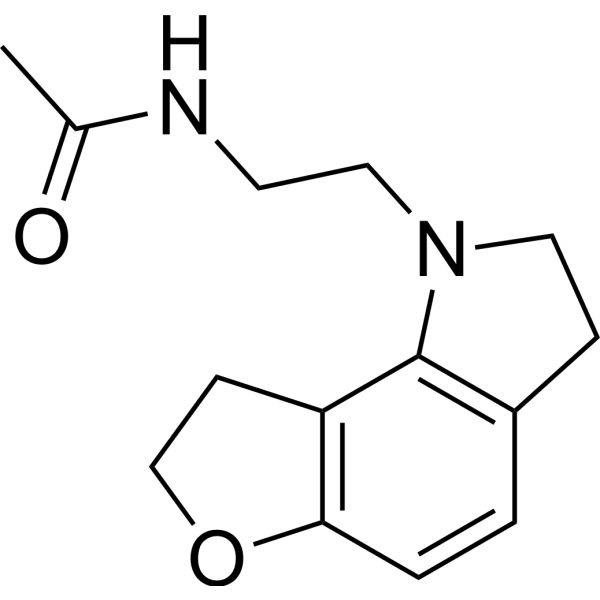 0 ImagesCat. No.: HY-116046CAS No.: 170729-12-1GR 196429 is a melatonin receptor agonist with some selectivity for the MT1 subtype. GR 196429 produces both sleep-promoting effects and alterations of circadian rhythm, as well as stimulating melatonin release in mice.
-
GW-117
 0 ImagesCat. No.: HY-176436SCAS No.: 2260629-83-0GW-117 is a 5-HT2C receptor antagonist and a melatonin (MT1/MT2) receptor agonist. GW-117 shows antidepressant-like and anxiolytic-like effects.
-
Luzindole (Standard)
 0 ImagesCat. No.: HY-101254RCAS No.: 117946-91-5Synonyms: N-0774 (Standard)Luzindole (Standard) is the analytical standard of Luzindole. This product is intended for research and analytical applications. Luzindole (N-0774) is a selective melatonin receptor antagonist. Luzindole preferentially targets MT2 (Mel1b) over MT1 (Mel1a) with Ki values of 10.2 and 158 nM for human MT2 and MT1, respectively. Luzindole suppresses experimental autoimmune encephalomyelitis (EAE), and exerts antidepressant-like activity.
-
N-Acetyltryptamine (Standard)
 0 ImagesCat. No.: HY-100908RCAS No.: 1016-47-3Synonyms: N10-Acetyltryptamine (Standard); Nb-Acetyltryptamine (Standard); Nω-Acetyltryptamine (Standard)N-Acetyltryptamine (Standard) is the analytical standard of N-Acetyltryptamine. This product is intended for research and analytical applications. N-Acetyltryptamine is a partial agonist for melatonin receptors in the retina. N-Acetyltryptamine is also used for determination of serotonin N-acetyl transferase activity.
-
Ramelteon (Standard)
 0 ImagesSynonyms: TAK-375 (Standard)Ramelteon (Standard) is the analytical standard of Ramelteon. This product is intended for research and analytical applications. Ramelteon is a potent, highly selective, and orally active agonist of MT1/MT2 with Ki values of 14 and 112 pM, respectively. Ramelteon has the potential for the research of insomnia. Ramelteon consistently reduces sleep onset after long-term treatment, with no next-morning residual effects or rebound insomnia or withdrawal symptoms upon discontinuation.
-
Ramelteon metabolite M-II (Standard)
 0 ImagesCat. No.: HY-103005RCAS No.: 896736-21-3Amlodipine (maleate) (Standard) is the analytical standard of Amlodipine (maleate). This product is intended for research and analytical applications. Amlodipine maleate is a dihydropyridine calcium channel blocker, acts as an orally active antianginal agent. Amlodipine maleate blocks the voltage-dependent L-type calcium channels, thereby inhibiting the initial influx of calcium. Amlodipine maleate can be used for the research of high blood pressure and cancer.
-
8-M-PDOT (Standard)
 0 ImagesCat. No.: HY-101358RCAS No.: 134865-70-6Synonyms: AH-002 (Standard)8-M-PDOT (Standard) is the analytical standard of 8-M-PDOT (HY-101358). This product is intended for research and analytical applications. 8-M-PDOT (AH-002) is a selective melatonin MT2 receptor agonist. 8-M-PDOT is 5.2-fold selective for MT2 over MT1 receptors. 8-M-PDOT binds human recombinant MT2 and MT2 receptors with pKi values of 8.23 and 8.95 respectively. 8-M-PDOT has anxiolytic-like activity.
-
Agomelatine (L(+)-Tartaric acid)
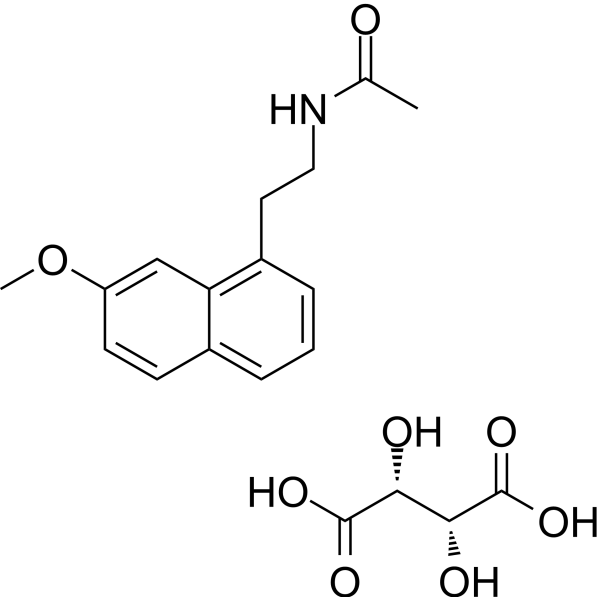 0 ImagesSynonyms: S-20098 L(+)-Tartaric acidAgomelatine L(+)-Tartaric acid (S-20098 L(+)-Tartaric acid) is a specific agonist of MT1 and MT2 receptors with Kis of 0.1, 0.06, 0.12, and 0.27 nM for CHO-hMT1, HEK-hMT1, CHO-hMT2, and HEK-hMT2, respectively. Agomelatine L(+)-Tartaric acid is a selective 5-HT2C receptor antagonist with pKis of 6.4 and 6.2 at native (porcine) and cloned, human 5-HT2C receptors, respectively.
-
UCSF3384
 0 ImagesCat. No.: HY-156156CAS No.: 2248752-25-0Synonyms: Z1480758218; ZINC000157673384UCSF3384 (Z1480758218) is a selective, blood-brain barrier-permeable MT1 inverse agonist, with an EC50 of 21 nM for hMT1. UCSF3384 selectively elevates basal cAMP levels. UCSF3384 delays circadian rhythm resetting and advances the onset of wheel-running activity rhythm in Mus musculus. UCSF3384 is applicable to research related to circadian rhythm disorders.
-
Tasimelteon-d5
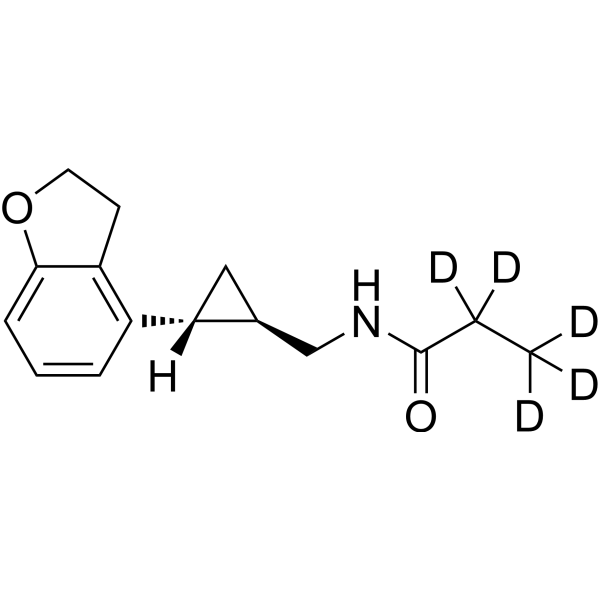 0 ImagesCat. No.: HY-14803SCAS No.: 1962124-51-1Synonyms: BMS-214778-d5; VEC-162-d5Tasimelteon-d5 is the deuterium labeled Tasimelteon. Tasimelteon (BMS-214778) is an orally active and selective dual melatonin receptor agonist (DMRA). Tasimelteon has 2.1-4.4 times greater affinity for the MT2 receptor than for the MT1 receptor. Tasimelteon is a circadian regulator and has the potential for Non-24-Hour Sleep-Wake Disorder (Non-24).
-
(R)-Ramelteon
 0 ImagesCat. No.: HY-I0603CAS No.: 196597-27-0Synonyms: (R)-TAK-375(R)-Ramelteon ((R)-TAK-375) is an orally active inactive isomer of the melatonin receptor 1 and 2. (R)-Ramelteon is promising for research of regulating sleep.
-
Piromelatine (Standard)
 0 ImagesSynonyms: Neu-P11 (Standard)Piromelatine (Standard) is the analytical standard of Piromelatine. This product is intended for research and analytical applications. Piromelatine (Neu-P11) is a melatonin MT1/MT2 receptor agonist, serotonin 5-HT1A/5-HT1D agonist, and serotonin 5-HT2B antagonist. Piromelatine (Neu-P11) possesses sleep promoting, analgesic, anti-neurodegenerative, anxiolytic and antidepressant potentials. Piromelatine (Neu-P11) also possesses pain-related P2X3, TRPV1, and Nav1.7 channel-inhibition capacities.
-
4-P-PDOT (Standard)
 0 Images4-P-PDOT (Standard) is the analytical standard of 4-P-PDOT. This product is intended for research and analytical applications. 4-P-PDOT is a potent, selective and affinity Melatonin receptor (MT2) antagonist. 4-P-PDOT is >300-fold more selective for MT2 than MT1. 4-P-PDOT significantly counteracts Melatonin-mediated antioxidant effects (GSH/GSSG ratio, phospho-ERK, Nrf2 nuclear translocation, Nrf2 DNA-binding activity).
-
Ramelteon-d3
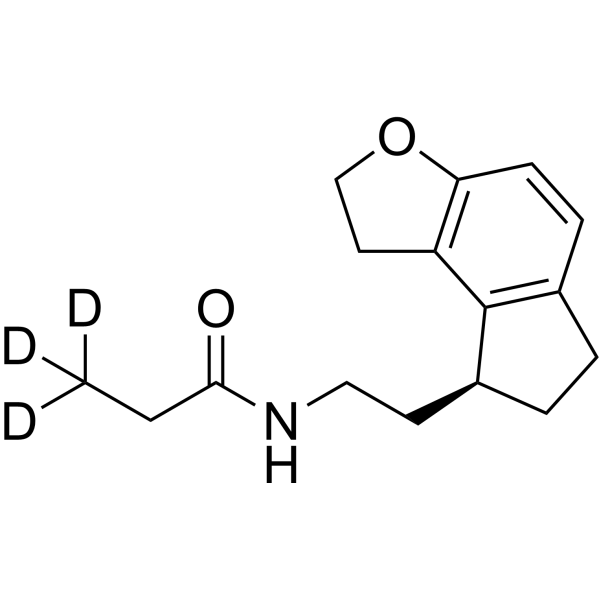 0 ImagesSynonyms: TAK-375-d3
-
2-Iodomelatonin (Standard)
 0 Images2-Iodomelatonin (Standard) is the analytical standard of 2-Iodomelatonin. This product is intended for research and analytical applications. 2-Iodomelatonin is a potent agonist of melatonin receptor 1 (MT1) with a Ki value of 28 pM, it is more 5-fold selective for MT1 ?over MT2. 2-iodomelatonin can be used to identify, characterize and localize melatonin binding sites in the brain and peripheral tissues.



